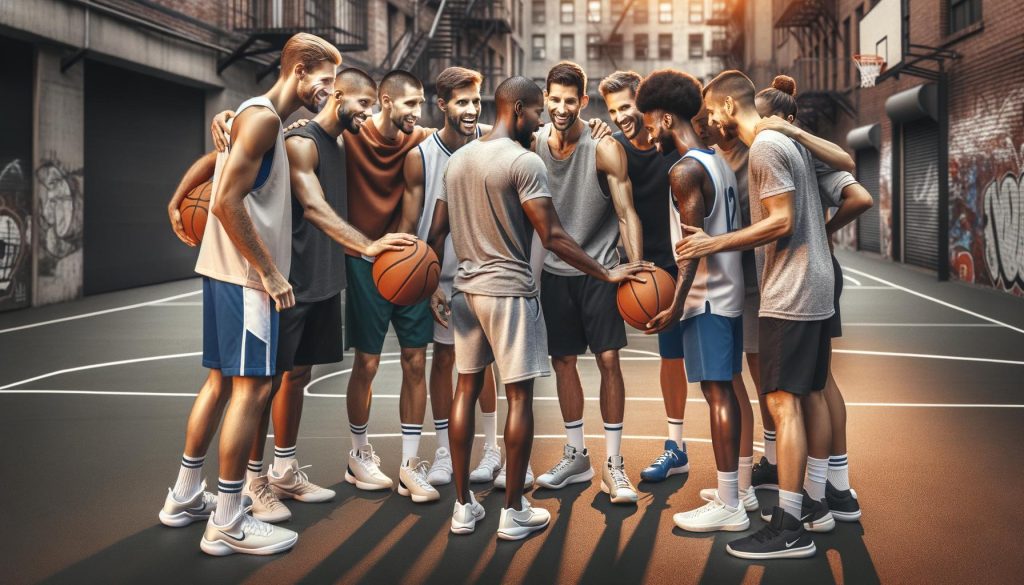
Imagine stepping onto the basketball court filled with a blend of excitement and self-doubt-many athletes experience this at some point. “How to Gain Confidence in Basketball: Sports Psychology for Winners” delves into essential psychological strategies that can transform those anxious moments into powerful performances. Confidence is not just about talent; it’s about mindset and preparation. Whether you’re struggling with pre-game jitters or feeling the pressure during critical plays, understanding the psychology behind confidence can unlock your true potential on the court. This guide will equip you with actionable techniques and insights to help you cultivate inner strength and resilience, allowing you to face challenges head-on. Ready to elevate your game and embrace the fearless player within? Let’s explore the journey to genuine confidence in basketball.
Understanding the Psychology of Confidence in Basketball
The mental game in basketball is as crucial as physical prowess. Confidence, in particular, plays a pivotal role in an athlete’s performance. It is not just about feeling good; it involves a deep-rooted belief in one’s abilities, which can significantly affect gameplay. High-pressure situations, whether during a critical shot or a last-minute play, can challenge a player’s confidence. Recognizing the psychological mechanisms behind confidence helps athletes understand how to strengthen it effectively.
Several psychological strategies can serve as cornerstones for building unwavering confidence on the court. One essential aspect is self-efficacy-believing in one’s capabilities to perform specific tasks. This belief can be nurtured through consistent practice, where athletes gradually take on more challenging goals, reinforcing their skills and self-trust. Another effective technique involves creating a personal success record by reflecting on past achievements. Celebrating small victories can shift focus away from self-doubt and help athletes visualize future successes.
Engaging in positive self-talk is another powerful approach. By consciously shifting negative thoughts to affirmations, athletes can influence their mindset positively. For example, instead of thinking, “I can’t make this shot,” players might replace it with, “I’ve practiced this shot countless times, and I can make it.” This shift encourages a more resilient attitude during competitive play. Visualizing success can further enhance this confidence, as imagining oneself succeeding can trigger the same emotional responses as actually performing the activity.
Finally, understanding that confidence is not a static trait but rather a skill that can be developed over time is critical. Athletes should be encouraged to embrace setbacks as learning opportunities rather than indicators of their abilities. By fostering an environment of growth and resilience, players can build a solid foundation of confidence that will serve them well throughout their basketball journey and beyond.
Key Mental Strategies for Building Confidence
Building confidence in basketball is not just about physical skill; it is equally a mental game. The good news is that confidence can be cultivated through various strategies that unlock your full potential. By implementing specific mental strategies, athletes can create a strong psychological foundation that supports their performance on the court. Here are some key techniques to consider.
Embrace Self-Efficacy
Believing in your ability to achieve specific tasks, known as self-efficacy, is a fundamental aspect of building confidence. To strengthen self-efficacy, begin by setting small, achievable goals during practice. Each time you accomplish these goals, whether it’s making a certain number of shots in a row or executing a new move, you reinforce your belief in your skills. Track your progress in a dedicated journal to visualize your development over time. This tangible record can provide ongoing motivation, especially during challenging periods.
Practice Positive Self-Talk
The words you say to yourself can dramatically impact your confidence level. Instead of allowing negative thoughts to fester, consciously practice positive self-talk. Replace the narrative of “I’m not good enough” with affirmations like “I am skilled, and I can handle this pressure.” Create a list of affirmations that resonate with you and recite them daily, especially before games. This routine can shift your mindset and foster a more positive self-image.
Utilize Visualization Techniques
Visualization is a powerful tool that can enhance performance and confidence. Before practices or games, take a few moments to visualize yourself executing skills successfully. Imagine the sound of the ball hitting the net, the energy of the crowd, and the satisfaction of performing well. This mental rehearsal can create a sense of familiarity and ease, making you feel more prepared when it’s time to play. Consider incorporating visualization into your warm-up routine as a way to center yourself and to reinforce your belief in a successful outcome.
Learn from Setbacks
Lastly, understand that confidence is not a one-time achievement but a continuous journey. Everyone experiences setbacks, but what matters is how you respond to those challenges. View mistakes as learning opportunities rather than negative reflections of your abilities. Develop a growth mindset by analyzing what went wrong and identifying actionable steps for future improvement. This perspective can help you maintain a resilient attitude, pushing you to train harder and improve your game without fear of failure.
By employing these mental strategies, athletes can not only build confidence but also foster a deeper connection with their abilities, enabling them to perform at their best in basketball and in life.
Visualization Techniques for Athletic Success
Visualization is not just a mental exercise; it’s a transformative technique that can significantly enhance an athlete’s performance and confidence in basketball. When athletes visualize successfully executing their skills, they are essentially creating a mental blueprint of their desired performance. This process not only improves their technical abilities but also instills a sense of self-assurance, making it feel as though success is an achievable reality.
To make the most of visualization, consider incorporating the following practices into your routine:
- Find a Quiet Space: Choose a calm and quiet space where you can focus without distractions. This can be in the locker room before a game or a quiet corner at home.
- Relax and Breathe: Begin with deep breathing exercises to calm your mind. As you breathe in, imagine drawing in confidence; as you exhale, release any tension or doubt.
- Be Specific: Visualize specific scenarios that you will encounter during the game. Picture yourself taking that crucial shot, making a defensive play, or executing a perfect pass. The more detailed your mental imagery, the more effective it will be.
- Create a Ritual: Incorporate visualization into your pre-game rituals. Spend a few minutes visualizing before warm-ups, reinforcing your belief in your abilities in a structured way.
- Use All Senses: Engage all your senses in the process. Imagine not only what you see but also the sounds of the crowd, the feel of the ball in your hands, and the taste of victory. This immersive approach enhances the vividness of your visualization.
Additionally, maintaining a positive mindset during visualization is crucial. Instead of focusing on potential pitfalls or past mistakes, concentrate solely on the successful execution of plays. If challenges arise during your visualization practice, embrace them as part of the journey. Recognizing barriers can provide insights into areas for improvement, further enriching your mental preparation.
Lastly, make visualization a regular part of your training regimen. Like any skill, it requires practice and consistency to yield results. Incorporate it alongside physical training to create a holistic approach to your development as a basketball player. This powerful tool lays the groundwork for true self-assurance on the court, enabling you to confront challenges with a controlled and confident mindset, ultimately transforming your performance into that of a champion.
Overcoming Performance Anxiety in Sports
Feeling anxious before a game is a common experience among athletes, but understanding how to overcome that anxiety can transform it into a source of power. It’s essential to recognize that performance anxiety often stems from the pressure to perform well, fear of failure, or high expectations we set for ourselves. However, rather than allowing anxiety to cripple your performance, you can leverage it to enhance focus and intensity on the court.
To tackle performance anxiety effectively, consider implementing a few strategies. First, embrace the anxiety instead of fighting it. Acknowledge that nervousness is a natural part of competition; it shows you care about your performance. By accepting these feelings, you can reduce their power over you.
Next, practice deep breathing techniques to calm your mind and body. Before stepping onto the court, take a moment to focus on deep, rhythmic breaths. Inhale through your nose for a count of four, hold for four, and then exhale slowly through your mouth for a count of six. Repeat this cycle until you feel more centered. Incorporating mindfulness or meditation practices into your regular routine can also help prepare your mind to remain calm and focused under pressure.
In addition to physical techniques, it’s helpful to develop a pre-performance routine. This could include engaging in specific warm-up exercises or listening to music that boosts your mood. A consistent routine can signal to your brain that it’s time to switch into competition mode, thereby alleviating some of the uncertainty that fuels anxiety.
Lastly, work on reframing your mindset. Instead of visualizing potential failures, create vivid pictures of success. Imagine executing plays flawlessly, celebrating with your teammates, or feeling the exhilaration of a close game. This shift in focus can help transform nervous energy into a motivating force that reinforces your confidence and readiness to perform at your best.
Addressing performance anxiety is a journey that involves compassion for yourself and a commitment to practice. Every athlete experiences self-doubt at times, but with the right tools and mindset, it’s entirely possible to face those fears head-on and emerge stronger and more confident on the court.
Developing a Winning Mindset for Basketball
To achieve success in basketball, one must cultivate a mindset that embraces positivity and resilience. Athletes at every level can benefit from understanding that their thoughts profoundly influence their performance on the court. Developing a winning mindset involves not just honing physical skills but reshaping the way you think about yourself, your capabilities, and the challenges you face during competition.
Start by incorporating routine mental conditioning into your training. This means taking time before practices and games to focus on your goals and visualize yourself excelling. Visualization is a powerful tool; imagine yourself making the winning shot, executing perfect plays, or displaying exceptional teamwork. Use sensory details in your visualization-what does the court look like, what sounds do you hear, how does the ball feel in your hands? This mental practice prepares your mind to act confidently when faced with real-game pressure.
In addition, self-talk plays a crucial role in fostering a winning mindset. Replace negative thoughts with affirmations that reinforce your abilities and potential. Instead of saying, “I can’t do this,” try affirming, “I am prepared, and I have worked hard for this moment.” Keeping a mental list of past successes as reminders of your capabilities can further bolster your confidence during tough moments.
Building a winning mindset stems from not just self-belief but also the creation of an encouraging environment. Surround yourself with teammates and coaches who uplift and support one another. Engage in uplifting conversations that reinforce trust in your collective skills. Practical exercises, such as group goal-setting sessions and sharing individual strengths, can enhance team dynamics and collective confidence. Remember, every setback is an opportunity for growth; embracing failures as learning experiences will only reinforce your mental fortitude.
Lastly, practice reflection after games and practices. Take time to analyze what went well and identify areas for improvement without harsh judgment. This practice not only aids in skill development but also cultivates a compassionate self-view that can significantly influence overall confidence on the court. By committedly developing a winning mindset, you unlock the potential to thrive not only in basketball but in all aspects of life.
Setting Achievable Goals to Boost Confidence
Setting achievable goals is a powerful strategy for building confidence in basketball, creating a clear pathway to success that can transform self-doubt into self-assurance. When you set realistic and specific targets, you not only provide yourself with direction but also create opportunities for measurable progress. As each goal is achieved, it reinforces your belief in your abilities, propelling you toward even greater challenges.
To start, break down your overarching aspirations, such as improving your shooting skills or becoming a better team player, into manageable increments. For instance, if your aim is to increase your free throw percentage by the end of the season, set smaller, attainable milestones like increasing your percentage by 5% every month. Here’s a simple approach:
- Identify Your Goals: Determine specific areas you want to improve.
- Set SMART Goals: Ensure your goals are Specific, Measurable, Achievable, Relevant, and Time-bound.
- Track Your Progress: Use a journal or digital app to record your improvements and setbacks.
- Adjust as Necessary: Don’t be afraid to modify your goals based on your progress and challenges encountered.
This method encourages a growth mindset, where mistakes are not viewed as failures but opportunities for learning. When you celebrate even the smallest achievements-like hitting a new benchmark in practice-you remind yourself of your capabilities and bolster your self-worth. Surrounding yourself with a supportive team can enhance this process; by sharing goals and providing mutual encouragement, you foster an environment where everyone feels empowered to pursue success together.
Moreover, consider setting short-term goals that lead to long-term visions. For instance, instead of just aiming to make your high school team, focus on daily practice routines, effective warm-ups, and improving specific skills. These small victories serve as stepping stones, each one building your confidence and reinforcing your determination to move forward. By maintaining focus on achievable goals, you not only enhance your skills but also cultivate a positive self-image that thrives under pressure, ultimately flowing into improved performance on the court.
The Role of Positive Self-Talk in Performance
Harnessing the power of positive self-talk can be a game-changer in basketball, transforming your mental landscape from doubt to confidence. Studies show that the way we speak to ourselves greatly influences our performance. When facing pressure, such as in crucial game moments, the narratives we create in our minds can dictate not just our physical abilities but also our overall success on the court. Positive self-talk fosters a mindset that embraces challenges, embraces resilience, and ultimately enhances performance.
One effective strategy is to create a list of motivational affirmations that resonate with you. These can be simple phrases like “I am capable,” “I perform well under pressure,” or “Every day, I improve my skills.” Repeating these affirmations before your games or practices can establish a positive mental environment. Consider integrating this practice into your pre-game routine, perhaps even taking a few moments to meditate or visualize yourself succeeding while reinforcing these empowering messages.
- Develop a Personal Mantra: A personal motto tailored to your aspirations can provide an instant confidence boost. For instance, “Focus, believe, achieve” reminds you to keep your attention on key aspects during gameplay.
- Reframe Negative Thoughts: Whenever a self-doubting thought creeps in, challenge it by asking, “Is this thought helping me?” Replace doubts with constructive thoughts like “I can learn from this” or “I’ve prepared for this moment.”
- Visualize Success: Envisioning successful plays and positive outcomes is powerful. Immerse yourself in the experience, feeling the excitement and believing in your ability to replicate these successes in real games.
By implementing these techniques, you’re not just building confidence; you’re actively engaging in a mental game that shapes your performance. Positive self-talk equips you to handle the ups and downs of basketball, encouraging a resilient mindset that thrives in competitions. As you foster this inner dialogue, remember that confidence is a journey, not an overnight transformation; each positive statement and mental rehearsal brings you one step closer to becoming your best self on and off the court.
Building Team Dynamics for Collective Confidence
Creating strong team dynamics is essential for fostering collective confidence in basketball. When players trust one another and work together seamlessly, they can elevate both their performance and mental resilience. A cohesive team environment allows players to focus less on individual doubts and more on collective goals, making them feel supported and more confident in their abilities. Building this unity requires intentional effort and specific strategies that can encourage open communication, mutual respect, and shared accountability.
To strengthen team dynamics, consider implementing regular team-building activities both on and off the court. Engage in exercises that promote collaboration, such as trust falls, group discussions about personal challenges, or cooperative drills that require players to rely on one another’s strengths. Encourage players to share their feelings and experiences about confidence and anxiety in a safe space. This practice not only fosters empathy but also reinforces the message that everyone has doubts, making it easier to support one another through challenging moments.
Additionally, establish a culture of positive reinforcement within the team. Celebrate not only individual accomplishments but also collective efforts. Recognizing and rewarding teamwork can lead to an increased sense of ownership and pride in group successes. When players see their contributions as valuable to the team’s overall success, they will feel more secure in taking risks, making mistakes, and learning together.
Lastly, ensure that there are opportunities for leadership development among team members. Assign roles based on each player’s strengths and encourage them to lead certain drills or discussions. For example, a player who excels in strategic thinking could be responsible for communicating plays, while a supportive teammate could check in with others about their mental readiness. By embracing a collaborative approach to leadership, you reinforce the notion that confidence comes from collective support and shared responsibility. This not only builds individual player confidence but also contributes to a powerful, unified team mindset that thrives under pressure.
Ultimately, when players feel connected and valued as part of a team, they are more likely to exhibit confidence in their abilities, leading to improved performances on the court.
Finding Your Personal Motivation as an Athlete
Every athlete has a unique source of motivation that fuels their passion for the game. Understanding and tapping into this personal drive can be transformative, enhancing both performance and confidence on the court. Whether it’s a childhood dream, the thrill of competition, or the desire to prove oneself, recognizing what inspires you is crucial. Reflecting on your journey as an athlete can help illuminate these motivations, allowing you to embrace them as powerful tools.
To uncover your personal motivation, start by engaging in self-reflection. Ask yourself questions such as: What drew me to basketball? What moments in my athletic career have brought me the most joy or fulfillment? Keep a journal to document your thoughts and feelings about your experiences, goals, and values. This practice can not only clarify your motivations but also serve as a source of strength during challenging times.
Visualize your goals as a way to reinforce your commitment. Create a vision board or engage in guided visualization exercises where you mentally picture yourself achieving your dreams. This visualization helps solidify your aspirations and primes your mind for success. Imagine the feeling of winning a game, executing the perfect play, or receiving recognition for your hard work. This mental rehearsal fosters a deeper connection to your goals, amplifying your drive to pursue them vigorously.
Additionally, surround yourself with a supportive network that shares your passion for the sport. Engage with teammates, coaches, and mentors who inspire you. Their encouragement can bolster your belief in yourself and reinforce your commitment to improvement. This community not only provides motivation but also holds you accountable, ensuring that you remain focused on your objectives.
Remember, motivation is not a one-time discovery; it’s an evolving journey. Regularly reassess your goals and motivations as you grow and experience new challenges. Embrace the process and stay attuned to what ignites your passion for basketball, transforming your mindset to view obstacles as opportunities for growth rather than setbacks. By doing so, you’ll cultivate a resilient confidence that carries you through both triumphs and trials on your athletic journey.
Practical Drills to Enhance Skill and Confidence
To truly cultivate confidence in basketball, engaging in specific practical drills can make a world of difference in both skill enhancement and self-belief. These exercises not only help develop essential basketball capabilities but also provide opportunities for athletes to see tangible improvements in their game, reinforcing their confidence on and off the court. Here are some impactful drills to consider:
Rebounding Drill
Focusing on rebounding can greatly enhance both your physical skills and confidence in your ability to impact the game. To execute this drill:
- Start by shooting from various spots on the court (baseline, free-throw line, three-point line).
- After each shot, sprint to the basket to grab your rebound.
- Challenge yourself by keeping track of how many rebounds you secure during a set time frame, such as five minutes.
This drill not only improves physical athleticism but also reinforces the belief that you can contribute significantly to your team.
Free Throw Challenge
Free throws are crucial in games, and improving your accuracy can boost your confidence in clutch situations. To implement this drill:
- Set a goal for yourself, such as making 10 free throws in a row.
- If you miss one, go back to zero and start again.
- Keep track of how many attempts it takes you to reach your goal and work to reduce that number over time.
The mental aspect of this drill helps you practice focus under pressure, essential for building confidence during real game situations.
1-on-1 Situational Plays
This drill enhances both offensive and defensive skills while fostering a competitive mindset. By practicing against a partner:
- Take turns playing offense and defense.
- Set specific scenarios, like “down by two points with 30 seconds left,” to simulate pressure.
- Discuss each play afterward to understand what worked and what didn’t.
Engaging in competitive play allows you to develop situational awareness and self-confidence in your decision-making abilities during critical moments.
Reflecting on Progress
To truly grow in confidence, it’s vital to reflect on your progress regularly. Consider keeping a journal of your drills and achievements. Documenting small victories can help nurture a positive mindset and inform you of your growth over time. Celebrate your improvements, big or small, as they form the foundation of sustained self-belief and motivation.
Incorporating these drills into your practice routine doesn’t just develop skills; it creates a visual and practical pathway to enhancing self-confidence. As you see marked improvement in your game, let that reflected growth fuel your belief in what you can achieve on the court.
Seeking Support: Coaches and Mentorship Importance
Support from coaches and mentors can be a game-changer for athletes seeking to build confidence in basketball. A strong mentorship connection not only offers technical guidance but also serves as a critical emotional anchor. Studies have shown that effective coaching can significantly enhance an athlete’s self-belief and resilience by providing a soundboard for concerns and an avenue for constructive feedback. Coaches help athletes identify their unique strengths and areas for improvement, promoting a growth mindset that’s essential for confidence building.
To maximize the benefits of coaching and mentorship, consider fostering an open line of communication where you can express your feelings about your performance. Actively seek feedback, and don’t hesitate to ask for clarity on strategies or techniques. Coaches can provide tailored drills that both challenge you and highlight your progress, reinforcing the belief that improvement is possible. Setting regular check-ins with your coach can further deepen this relationship, allowing for continuous dialogue about your ambitions and anxieties, thus laying a foundation for trust and encouragement.
Building a Supportive Network
Creating a network of support beyond just coaches is equally crucial. Surround yourself with teammates, mentors, or even friends who uplift you. These individuals can serve as a motivational force, sharing their own experiences of overcoming self-doubt and performance anxiety. Consider organizing team bonding activities that help break the ice and foster a supportive environment where everyone feels empowered to voice their challenges. A strong team dynamic breeds confidence, as you realize you are not alone in your journey.
To enhance your support system, seek out resources such as clinics, workshops, or online forums where athletes can share experiences and tips. Participating in training camps led by experienced mentors can provide you with fresh perspectives and strategies for overcoming common confidence barriers. Engage with these communities actively; they can not only reinforce your motivation but also inspire you to tackle challenges with renewed vigor. In cultivating a supportive environment, you can transform your roadblocks into stepping stones toward greater self-confidence.
Success Stories: How Champions Overcame Doubt
In the journey to success, many champions in basketball faced significant doubts and hurdles that threatened their confidence. What sets them apart is not just talent, but their ability to transform challenges into stepping stones. For instance, renowned players like Michael Jordan experienced self-doubt early in their careers. After being cut from his high school basketball team, he used this setback as motivation to practice relentlessly. Jordan’s story exemplifies how resilience can turn temporary failures into lasting success.
Empowered by their experiences, champions often share specific mental strategies that helped them overcome self-doubt. LeBron James, for example, emphasizes the power of visualization in his routine. He imagines himself in high-pressure game situations, which allows him to mentally prepare and feel more confident when faced with real challenges. Visualization not only builds familiarity with scenarios but also reinforces belief in one’s abilities, helping athletes step onto the court with a mindset tailored for success.
Understanding the importance of mentorship also plays a crucial role in championing confidence. Legends like Kobe Bryant frequently spoke about the influence of coaches and mentors on his journey. Observing and learning from leaders in the sport, he cultivated a strong work ethic and a winning mentality. By integrating feedback from his mentors and continuously refining his skills, Bryant demonstrated that seeking guidance and maintaining a growth mindset can significantly bolster confidence.
For athletes looking to emulate these success stories, a few actionable steps can help build a solid foundation of self-belief:
- Set realistic goals: Break down larger objectives into manageable milestones that showcase progress.
- Practice mindfulness: Engage in meditation or grounding techniques to manage anxiety and maintain focus during games.
- Connect with a mentor: Seek someone who can provide insights, encouragement, and constructive feedback.
- Document your journey: Keep a journal of challenges faced and lessons learned to track growth and build resilience.
By adopting these methods and embracing the mindset modeled by champions, athletes can cultivate a deeper sense of self-confidence that empowers them on and off the court.
Q&A
Q: How can visualization techniques improve my basketball performance?
A: Visualization techniques help athletes mentally rehearse their skills and strategies, allowing them to experience success in their minds before the actual game. By regularly practicing visualization, players can enhance their confidence and reduce anxiety, leading to improved performance on the court. Consider taking time each day to visualize specific plays or successful shots.
Q: What role does goal setting play in building confidence in basketball?
A: Setting achievable goals enhances confidence by providing clear benchmarks for success. When players reach these goals, they gain a sense of accomplishment. To effectively set goals, make them specific, measurable, and time-bound. Regularly review and adjust these goals as needed to ensure ongoing motivation and focus.
Q: Why is positive self-talk important for basketball players?
A: Positive self-talk fosters a constructive mindset, which is crucial for sustaining confidence during both practice and competition. It encourages players to focus on their strengths and abilities rather than self-doubt. Athletes should practice affirming statements before and during games to maintain focus and poise under pressure.
Q: How can teamwork enhance individual confidence in basketball?
A: Teamwork boosts individual confidence by fostering a supportive environment where players can rely on each other. When team members communicate effectively and celebrate each other’s successes, it builds collective confidence. Engage in team-building activities to strengthen relationships and improve overall team dynamics.
Q: What mental strategies can help overcome anxiety before games?
A: To overcome pre-game anxiety, athletes can employ mindfulness techniques such as deep breathing, progressive muscle relaxation, or focused meditation. These strategies help to calm the mind and reduce tension, allowing players to enter the game relaxed and ready to perform. Incorporate these practices into your pre-game routine for maximum effect.
Q: When should athletes seek mentorship for confidence building?
A: Athletes should consider seeking mentorship when they face consistent self-doubt or performance issues. A mentor can provide guidance, share personal experiences, and help identify strategies tailored to the individual’s needs. Establish regular check-ins for ongoing support and development in both skill and confidence.
Q: How can I measure my confidence growth in basketball?
A: Measuring confidence growth can be done through self-reflection and performance analysis. Keep a journal to track both your feelings of confidence and specific game outcomes related to your mental state. Regular reviews of progress, alongside coaching feedback, can illustrate your development over time.
Q: What practical drills can I do to boost confidence in my shooting skills?
A: To enhance shooting confidence, practice drills such as free-throw challenges, shooting from different spots on the court, and time-bound shooting routines. Focus on consistency and gradually increase the difficulty. Tracking your progress and celebrating small victories can significantly boost your confidence in your shooting abilities.
To Conclude
Now that you have the tools to enhance your confidence on the basketball court, it’s time to put them into action. Remember, consistently practicing mental techniques, visualizations, and positive affirmations will solidify your newfound self-belief. Don’t hesitate to revisit our guides on overcoming performance anxiety and building resilience in both sports and everyday life-your journey to success doesn’t end here.
Take the first step today: explore our resources further, join our newsletter for ongoing tips, or connect with fellow players in our community. Your voice matters-share your progress or ask questions in the comments below and help others on their paths. Believe in yourself, implement these strategies, and watch your confidence soar, not just in basketball, but in every aspect of life.